Australia Study Visa Consultants in India for 2026-27 Intakes
India accounted for 16% of Australia’s international student population during January–May 2026, while the wider market became more selective: overall international enrolments declined even as higher-education enrolments continued to grow.
For Indian applicants, this increases the importance of choosing a course and institution that are not only attractive, but also appropriate for their academic background, financial capacity and long-term career direction.
An offer letter, however, addresses only one part of the process. A student may satisfy a university’s admission criteria and still have unresolved questions around course progression, study gaps, sponsor capacity, source of funds or the Genuine Student requirement.
This is where structured counselling becomes valuable. Therefore, at Flytouch Overseas, the profile-first approach forms the basis of our Australia study counselling. Moreover, we aim to help students compare suitable study options, identify possible concerns early and prepare a more consistent academic, financial and application strategy.
Australia Study Trends in 2026: What the Official Data Shows
According to the Australian Government Department of Education’s May 2026 international student data, 680,582 international students studied in Australia during January–May 2026, a 6.9% decline from the same period in 2025. India remained one of the largest source countries, accounting for 16% of international students.
| 2026 Indicator | Official Position |
| International students | 680,582 |
| Total international enrolments | Down 8% year on year |
| Higher-education enrolments | Up 2% year on year |
| Master’s by coursework | 43% of higher-education study |
| Bachelor’s degrees | 41% of higher-education study |
| Leading fields | Management and Commerce, followed by Information Technology |
The insight is not that every student should choose business or IT. Popularity does not establish suitability; course content, cost, location and career relevance still need to fit the individual profile.
Understanding the Australia Student Visa Subclass 500
Most international students require a Student visa (subclass 500) for eligible full-time study. Before applying, a student generally needs to accept an offer and receive a Confirmation of Enrolment (CoE) from the education provider.
From 1 July 2026, Student visa application charges start from AUD 2,500 for most primary applicants unless an exemption or concession applies. Student visa holders must remain enrolled, maintain health cover and comply with their visa conditions.
Eligible students can generally work up to 48 hours per fortnight while their course is in session and may work unlimited hours during scheduled course breaks, subject to their individual visa conditions. Students should understand the current Australia student working hours before planning part-time employment, as work income should not be treated as the primary source of tuition fees or living expenses.
Australia Study Visa Eligibility for Indian Students
Eligibility is not decided by one fixed percentage, English score or gap limit. Requirements vary by institution, course, study level and applicant circumstances.
1. Academic Requirements
For undergraduate study, institutions commonly review Class 12 results, relevant subjects and course-specific prerequisites. For postgraduate study, they may assess the applicant’s bachelor’s degree, marks, subject relevance and professional experience.
A lower score, study gap or field change does not automatically make an applicant unsuitable, but it may require more careful course selection and stronger evidence. The proposed study should connect with the applicant’s education, experience or career plan.
2. English-Language Requirements
Australian institutions may accept IELTS, PTE Academic and other approved tests. Required scores differ by provider and course, and some applicants may qualify for alternative English pathways. Students should check current provider and visa requirements rather than rely on one score quoted online.
3. Genuine Student Requirement
The Genuine Student (GS) requirement focuses on whether study is the primary reason for the application. Applicants may need to explain their current circumstances, course and provider choice, understanding of studying in Australia and the expected benefit of the qualification.
Strong GS responses are personal, evidence-based and consistent with the student’s academics, employment, finances, course modules and career direction.
Step-by-Step Australia Study Visa Process
- Profile assessment: Review academics, English, gaps, work experience, budget and visa history.
- Course and institution shortlisting: Compare curriculum, tuition, location, intakes, entry requirements and career relevance.
- Admission application: Submit accurate academic, identity, English-language and supporting documents.
- Offer review: Check tuition deposits, conditions, refund terms and any additional assessment.
- Confirmation of Enrolment: Meet the offer conditions so the provider can issue the CoE.
- Financial preparation: Plan for tuition, travel and living expenses with clear evidence of sponsor capacity and source of funds.
- GS and document review: Check names, dates, academics, employment, finances and visa history for consistency.
- Visa application: Lodge through ImmiAccount and respond to any further requirements.
- Pre-departure preparation: Review accommodation, travel, health cover and visa conditions.
Documents Commonly Required for Australia Visa
The exact checklist depends on the applicant and provider. Common documents include:
- Passport and identity documents
- Academic certificates, marksheets and transcripts
- English-language evidence, where required
- Offer letter, CoE and tuition-payment evidence
- GS responses and supporting documents
- Bank statements, education loan, or other financial evidence
- Sponsor identity, income and source-of-funds documents
- OSHC, employment, study-gap and previous visa records
- Health or character documents, where requested
The documents should present consistent academic, financial and personal circumstances.
Australia Study Cost and Financial Planning
The cost of studying in Australia goes beyond tuition. Students should plan for visa charges, living expenses, health cover, travel and other application-related costs.
2026 Financial Snapshot
| Cost Component | Current Position |
| Student visa application charge | From AUD 2,500 for most primary applicants from 1 July 2026 |
| Minimum living-cost evidence | AUD 29,710 for an individual student |
| Tuition fees | Vary by institution, course and qualification level |
| Additional costs | OSHC, airfare, medicals, English testing, accommodation and daily expenses |
The AUD 29,710 figure applies only to the student’s minimum living-cost component. Tuition and travel are additional, and actual expenses may be higher depending on location, accommodation and lifestyle.
The minimum figure should not be treated as the complete cost of studying in Australia. A realistic budget should include tuition, visa charges, health cover, travel and initial settlement expenses. Students can review the current requirements through the official Australian Student visa application guide.
Why Choose Flytouch as Your Australia Education Consultant?
Flytouch provides structured guidance from course selection to pre-departure preparation, based on the student’s education, goals, preferred location and budget.
Profile-Based Course Guidance
Instead of presenting the same institutions to every applicant, we compare courses and providers against the student’s academics, English proficiency, career direction and preferences.
In-Person and Online Support
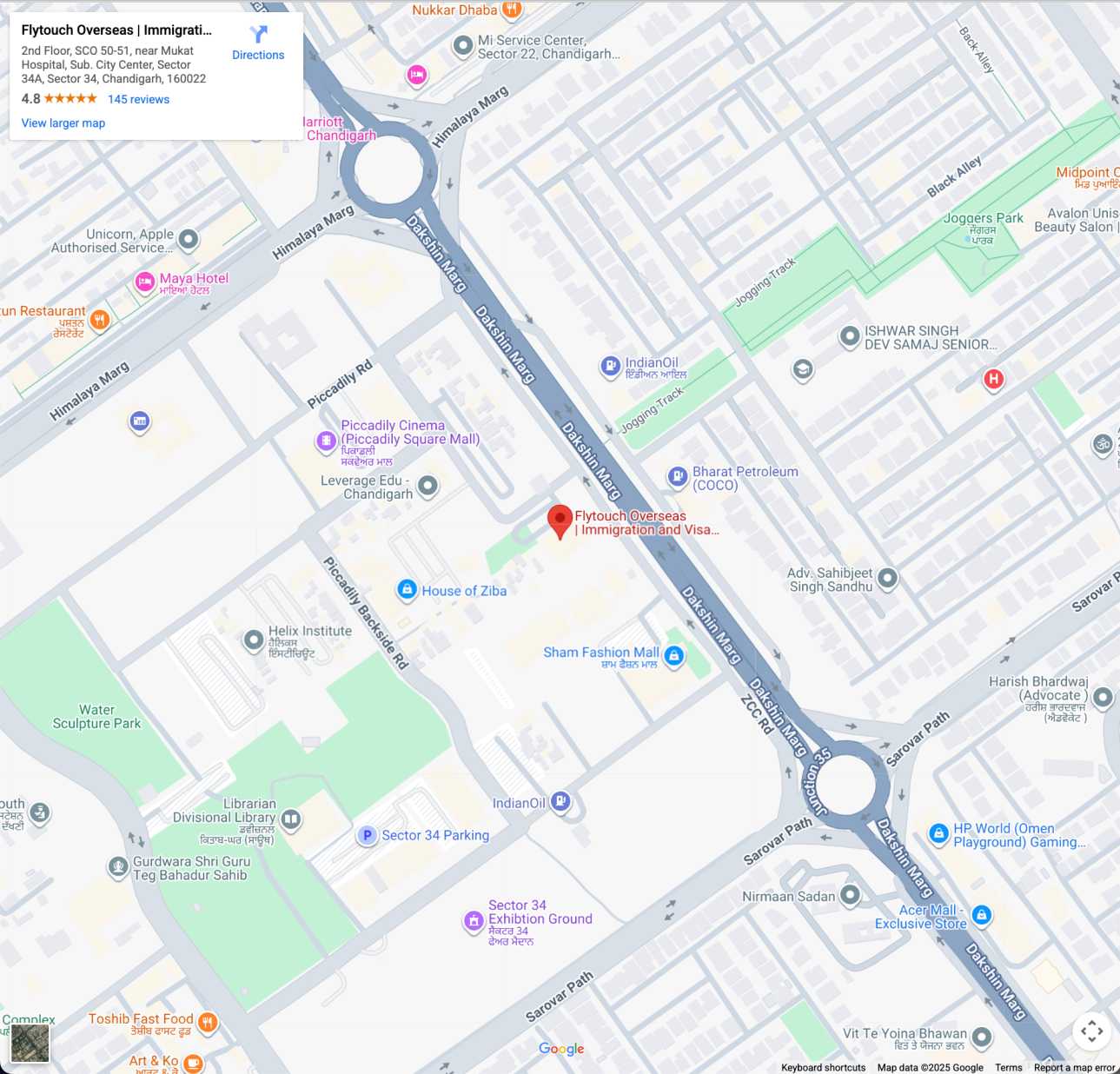
Students from Chandigarh, Mohali, Panchkula and nearby regions can connect with our Australia study visa consultants in Chandigarh for profile assessment, course selection and admission guidance.
Address: 2nd Floor, SCO 50-51, near Mukat Hospital, Sub. City Center, Sector 34A, Sector 34, Chandigarh, 160022
Contact Number: +91-9041904194
Our Australia study visa consultants in Ambala assist students from Ambala, Kurukshetra, Yamunanagar, Karnal and surrounding areas.
Address: Second Floor, Shop No, 42-43, Railway Rd, above Bank of Baroda, Ambala, Haryana 134003
Contact Number: +91-9876555175
Flytouch also supports students across Punjab, Haryana, Himachal Pradesh, Delhi, Rajasthan, Uttar Pradesh, Uttarakhand and Jammu and Kashmir. Online counselling is available for applicants from West and South India as well.
Support at Every Stage
- Course and institution shortlisting
- Admission application assistance
- Offer-condition and scholarship guidance
- Genuine Student preparation
- Financial and supporting-document coordination
- Pre-departure guidance
Flytouch provides education counselling, admission assistance, document coordination and general Student visa information. Education providers decide admissions; the Department of Home Affairs decides visas.
Common Risks We Check Before Submission
Students should pay particular attention to:
- A course with no clear connection to previous education or employment
- Unexplained study gaps or major career changes
- Copied or overly generic GS answers
- Inconsistent dates across forms and documents
- Unsupported sponsor income or unexplained funds
- Incomplete employment or business evidence
- Failure to disclose previous visa refusals
- Assuming part-time work will cover the complete study budget
- Submitting without a complete review
A stronger application is one in which the course choice, finances and plan support each other naturally.
Start Your Australia Study Journey with Flytouch Overseas
The right Australia study plan begins with an honest profile assessment. Before choosing a university, understand your eligibility, progression, budget, English requirements and documentation needs.
Flytouch guides its Chandigarh and Ambala offices and online across India. Keep your passport, academics, English result, work or gap evidence and budget ready for review.
You can contact Flytouch Overseas to book a profile discussion and understand the next suitable step for your Australia study plan.
Important: Visa rules, government fees, processing priorities and education-provider requirements may change. Always verify the latest applicable requirements before submitting an application.