China Visa & Immigration Services in India
Applying for a Chinese visa from India can be straightforward when the file is prepared around the real purpose of travel. This matters for business owners, traders, exporters, importers, factory visitors, Canton Fair travellers, tourists, students, and professionals who need a smooth visa experience.
Indian applicants must understand the correct visa category, updated documents, consular jurisdiction, online approval steps, service centre submission, fee structure, and realistic timelines before planning travel.
A small error in filing can delay the case, even when the travel reason is genuine. For applicants comparing China visa services in India or speaking with China visa consultants in India, the real value is knowing what the Chinese Embassy and Visa Centre check before submission.
Quick Answer: Who Needs China Visa Support in India?
You should consider professional help if your case involves:
| Applicant Type | Why Guidance Helps |
| Business traveller | Invitation, company proof, trade purpose and travel dates must match |
| Canton Fair visitor | Fair invitation, business background and visit plan need proper alignment |
| Tourist applicant | Itinerary, hotel booking and financial proof must look realistic |
| First-time traveller | Profile explanation and supporting documents need closer review |
| Multiple-entry applicant | Previous travel history and business needs should justify the request |
| Urgent traveller | Timing, holidays, appointment slots and service type must be checked early |
This is where structured China visa services in India help applicants avoid confusion and prepare a stronger file from the beginning.
Latest Official Updates Indian Applicants Should Know
China's visa rules are not static. Applicants should always check the latest notices from the Chinese Embassy in India, the relevant Chinese Consulate and the Chinese Visa Application Service Centre before applying.
Important current points include:
- According to the Chinese Embassy in India, reduced Chinese visa fees for Indian applicants are extended until 31 December 2026.
- The Embassy has also notified that fingerprint collection is exempted until 31 December 2026 for eligible short-term visa applicants whose stay does not exceed 180 days.
- CVASC fee pages show that Visa Centre service charges are separate from Embassy visa fees.
- CVASC Delhi lists normal collection as expected on the 6th working day and express collection as expected on the 4th working day.
Applicants from Maharashtra and Karnataka generally fall under the Mumbai Consulate's jurisdiction, while applicants from Bihar, Jharkhand, Odisha, Chhattisgarh, and West Bengal fall under the Kolkata Consulate's jurisdiction.
These official updates matter because applicants often miscalculate timelines. For example, a business traveller visiting a supplier in Guangzhou may assume four working days means one calendar week.
In practice, CVASC submission timing, Embassy or Consulate review, public holidays, appointment availability, document corrections and passport collection can extend the timeline.
China Visa Process for Indians
The China visa process for Indians usually follows a structured path. The exact steps may change depending on the category and current rules, but most applicants should prepare for:
- Identifying the correct visa category.
- Preparing the visa application form.
- Collecting category-specific documents.
- Checking passport, photograph and identity details.
- Reviewing the invitation, travel plan or admission documents.
- Submit details through the applicable official route.
- Waiting for review or approval, where applicable.
- Attending the Visa Centre submission process.
- Paying visa and service fees.
- Collecting the passport after processing.
The fastest applications are not usually the ones prepared in a hurry. They are the ones where the travel purpose is clear, documents are consistent, and the applicant understands what the Embassy or Visa Centre expects.
Main China Visa Categories for Indian Applicants
Choosing the wrong category is one of the most common reasons for confusion. Before selecting China visa services in India, applicants should understand which visa type matches their travel purpose.
1. China Business Visa
This is commonly used for supplier meetings, factory visits, exhibitions, commercial negotiations, product sourcing and trade fairs. Indian importers and exporters often apply under this category when visiting cities such as Guangzhou, Shenzhen, Yiwu, Shanghai or Beijing.
Business applicants attending supplier meetings, factory visits or trade exhibitions should also check whether their invitation supports an M visa format, especially when the visit is linked to product sourcing, commercial negotiation or Canton Fair travel.
2. China Tourist Visa
This is for leisure travel, sightseeing and personal tourism. A tourist file should show a believable travel route, hotel plan, financial capacity and intention to return to India.
China tourist visa consultants must follow a different approach from business travellers because the focus shifts to itinerary, hotel planning, financial capacity and return intention.
3. China Student Visa
This applies to applicants going to China for studies. The file usually depends on admission documents and education-related approvals.
4. China Family Visit Visa
This is used when visiting relatives who are legally staying in China. Relationship proof becomes important.
5. China Work Visa
Employment-related travel is more complex and generally requires approvals from the Chinese side before visa filing.
Correct category selection matters because supporting documents change completely according to the purpose of travel.
Which China Visa Category Should You Choose?
| Situation | Typical Visa Category |
| Canton Fair | M Visa |
| Factory Visit | M Visa |
| Supplier Meeting | M Visa |
| Holiday Travel | L Visa |
| Family Visit | Q/S Visa |
| University Studies | X Visa |
China Visa Documents for Indian Citizens
The China visa documents for Indian citizens vary by category, but most files need a combination of identity, travel, financial and purpose-based evidence. Before preparing the file, applicants should first check passport validity for the China visa submission, blank pages, signature, physical condition and name consistency across all documents.
| Document Area | What to Check |
| Passport | Validity, blank pages, signature, physical condition and clear personal details |
| Photograph | Size, background and recent appearance |
| Application form | Name, passport number, travel dates, and address consistency |
| Travel plan | Entry city, exit city, hotel and duration |
| Financial proof | Bank balance, transactions and source of income |
| Employment proof | Leave letter, salary slips or employment verification |
| Business proof | GST, registration, company profile or trade documents |
| Invitation | Chinese company/person details, dates, purpose and stamp/signature where applicable |
If the passport is damaged, close to expiry, unsigned, or has unclear personal details, renewing it before applying may prevent avoidable submission issues, especially for business travellers requesting multiple entries.
For business applicants, the file should also clearly explain why the applicant is travelling, who they are meeting, where they will go, and why the visit is commercially relevant.
China Visa Application from India: National-Level Guidance
A China visa application from India should be planned according to the applicant’s jurisdiction, profile and travel purpose. Chinese visa applications are generally processed through the applicable Embassy or Consulate route, so applicants should confirm the correct submission route before preparing the final file.
| Applicant State / Region | Usual Processing Route |
| Maharashtra, Karnataka | Chinese Consulate-General in Mumbai |
| Bihar, Jharkhand, Odisha, Chhattisgarh, West Bengal | Chinese Consulate-General in Kolkata |
| Delhi, Punjab, Haryana, Chandigarh, Rajasthan, Uttar Pradesh, Himachal Pradesh, Gujarat, Madhya Pradesh and most other Indian states/UTs | Chinese Embassy / New Delhi route |
Jurisdiction can affect appointment planning, Visa Centre selection, document checking and processing expectations. This is why many applicants prefer China visa services in India when applying from smaller cities or when they are unsure about the correct route.
China Visa Fees for Indians
China visa fees for Indians depend on entry type, nationality, service type and Visa Centre charges.
For Indian passport holders, the official reduced visa fee table currently lists:
| Visa Type | Embassy Visa Fee |
| Single Entry | ₹2,900 |
| Double Entry | ₹4,400 |
| Half-Year Multiple Entry | ₹5,900 |
| One-Year Multiple Entry | ₹8,800 |
The Visa Centre service fee is separate. The Delhi Visa Centre lists regular service collection as expected on the 6th working day and express service collection as expected on the 4th working day, with service charges applicable separately.
Applicants should not compare only the “visa fee.” The total cost may include Embassy fee, Visa Centre service fee, express service fee if selected, courier or travel costs, and professional assistance charges if using a consultant.
China Visa Processing Time in India
China visa processing time in India depends on service type, document completeness, Embassy or Consulate workload, holidays and whether additional verification is required.
| Situation | Recommended Filing Approach |
| Tourist trip | Start at least 3–4 weeks before travel |
| Business meeting | Start once the invitation and company documents are ready |
| Canton Fair | Start early because demand increases before fair dates |
| Urgent visit | Check express eligibility and holiday schedule first |
| Multiple-entry request | Prepare a stronger justification and travel history proof |
Timing becomes more sensitive before major trade events, especially when applicants are preparing for the China Canton Fair travel, with fixed exhibition dates.
Applicants should avoid non-refundable tickets until they are confident about visa timing.
China Visa Requirements India: What Officers Actually Evaluate
China visa requirements for India are not only a checklist. Officers assess whether the application makes sense.
They may look at:
- If the travel purpose is genuine.
- Whether the documents support the selected category.
- If the applicant can afford the trip.
- Whether the travel history supports the request.
- If the invitation is credible.
- Whether the applicant is likely to return to India.
- If dates match across all papers.
Good China visa services in India should identify these weaknesses before submission. Official Chinese Embassy visa requirements explain what to submit, but applicants must also understand how those documents are interpreted.
For example, if a business applicant says they are visiting a machinery supplier but submits no business proof from India, the file becomes weak. If a tourist gives a 12-day itinerary but shows low available funds and unclear employment, the case may require a stronger explanation.
Invitation Letter and Visa Application Form Checks
For business, family visit and trade-related applications, the invitation letter for a China visa and the visa application form for China must support the same travel purpose.
| Check Area | What to Review | Why It Matters |
| Invitation details | Inviting company/person, Chinese address, contact details | Confirms who is inviting the applicant |
| Applicant details | Name, passport number, visit dates | Prevents a mismatch with the passport and form |
| Travel purpose | Supplier visit, Canton Fair, factory visit, tourism or family visit | Shows why the applicant is travelling |
| Relationship proof | Business link, family relation or an inviting-party connection | Supports the reason for the invitation |
| Form details | Occupation, employer/business details, China address, travel dates | Keeps the application consistent |
| Supporting documents | Indian business/employment proof, itinerary, hotel or financial documents | Connects the application with the real profile |
Key risk: The invitation, form and supporting documents should tell the same story. A vague “business meeting” invitation may be weak if the applicant is actually attending the Canton Fair, visiting suppliers or inspecting a factory.
Common China Visa Mistakes
Common China visa mistakes usually happen because applicants treat the process as a formality.
Avoid these errors:
- Selecting the wrong visa category.
- Submitting weak or incomplete invitation details.
- Giving mismatched travel dates.
- Using hotel bookings that do not match the itinerary.
- Providing unclear financial documents.
- Ignoring jurisdiction rules.
- Applying too close to the travel date.
- Requesting multiple entries without justification.
- Submitting business files without business proof.
- Assuming express service guarantees approval.
The best way to prevent these errors is to review the file like a visa officer would: purpose, proof, consistency and credibility.
How to Decide Whether You Need Professional Help
You should consider guidance if you are:
- Applying for the first time.
- Visiting China for business, suppliers, factories or the Canton Fair.
- Unsure about the correct jurisdiction.
- Checking an invitation letter before submission.
- Facing document inconsistencies.
- Applying with fixed travel dates.
- Requesting double or multiple entries.
- Reapplying after a previous visa issue.
Professional guidance is not about promising approval. It is about reducing avoidable errors, improving document readiness and helping the applicant follow the correct official process. For many applicants, the right China visa services in India provide clarity before submission, not after a delay or correction request.
How Flytouch Overseas Helps with China Visa Applications Across India
Different applicants need different file logic. A Punjab trader visiting suppliers, a Maharashtra business owner attending the Canton Fair, a Delhi tourist family and a Haryana importer may all require different supporting documents.
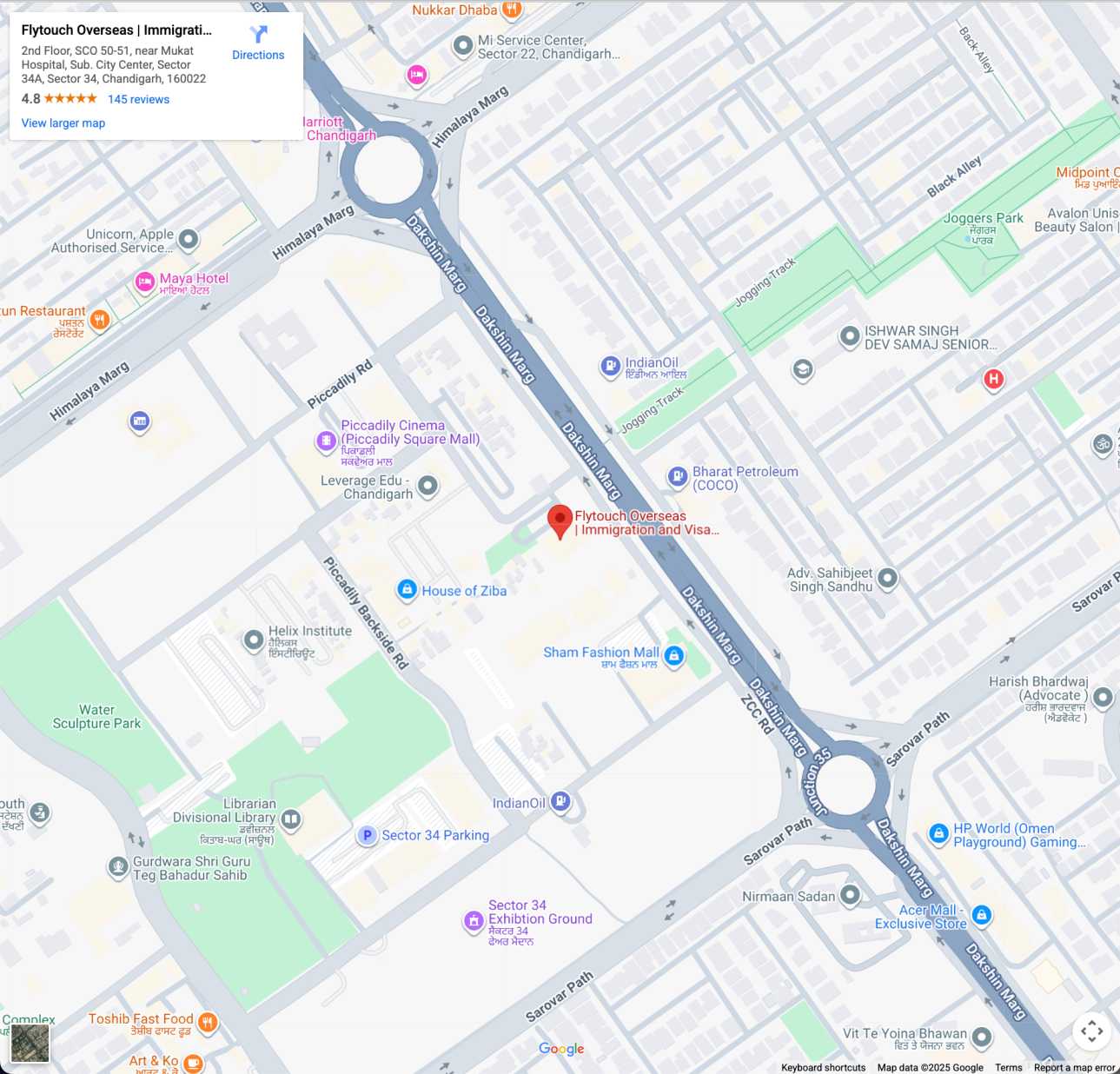
With offices in Chandigarh and Ambala, Flytouch Overseas assists applicants across India, including Punjab, Haryana, Delhi NCR, Maharashtra, Gujarat, Rajasthan, Uttar Pradesh, Karnataka and other states, through a structured China visa file-preparation process.
| What We Check | Why It Matters |
| Visa category | To ensure the application matches the real travel purpose |
| Jurisdiction | To guide applicants according to the applicable submission route |
| Invitation letter | To check dates, company details, purpose, applicant information and consistency |
| Indian-side documents | To connect a business, employment or financial profile with the visit reason |
| Application details | To reduce errors in passport number, travel dates, occupation and address |
| Timeline planning | To avoid last-minute filing before business meetings, fairs or booked travel |
| Entry request | To assess whether single, double or multiple entry is practically justified |
We regularly assist applicants travelling to Guangzhou, Shenzhen, Yiwu, Beijing and Shanghai for supplier visits, exhibitions, machinery procurement and Canton Fair participation.
As China visa consultants in Chandigarh and Ambala, we focus on preparing a clear, purpose-driven file before submission rather than treating the process as mere paperwork. This makes our support practical for applicants comparing professional China visa services in India at a national level.
Final Advice for Indian Applicants
China remains highly important for Indian trade, manufacturing, tourism, education and business travel. The visa process is manageable, but it requires attention to detail.
Before applying, check your visa category, documents, jurisdiction, fee, timeline and travel purpose. Do not rely on outdated information or copied checklists. Use official Embassy and Visa Centre updates as the base, then prepare your file according to your real profile.
For applicants who want organised, reliable and practical China visa services in India, the strongest approach is simple: prepare early, keep documents consistent, match the visa category with the real purpose, and review the file before submission.
A well-prepared China visa file does not just answer “what documents are required.” It answers the more important question: Does this application clearly prove why the applicant is travelling to China and why they are expected to return to India?
FAQs (Frequently Asked Questions)
Clear any doubts you might have with the most Frequently Asked Questions:
The China visa processing time in India typically ranges between 4 to 10 working days after submission, depending on the visa type and document accuracy. Business and work visas may take longer if additional verification is required. Applying early helps avoid delays, especially during peak travel seasons and major trade fairs.
The required documents usually include a valid passport, recent photographs, a visa application form, and supporting documents based on visa type. Business visas require invitation letters, student visas require university admission letters, and work visas require employer authorisation. Proper documentation review improves approval chances significantly.
Yes, an invitation letter issued by a registered Chinese company is mandatory for most business visa applications. The letter must include the applicant's details, travel purpose, visit duration, and official company information. Incorrect or incomplete invitation letters are one of the most common reasons for visa delays or rejection.
Yes, Indian citizens can apply for single, double, or multiple-entry China visas depending on their travel purpose and eligibility. Multiple-entry visas are commonly issued to business owners and professionals who travel frequently to China for meetings, exhibitions, or supplier visits.
China visa applications may be rejected due to incomplete documentation, incorrect visa category selection, unclear travel purpose, or improper invitation letters. Ensuring accurate paperwork and submitting a complete application reduces the chances of refusal and improves approval confidence.
Yes, applicants can apply independently, but the process requires careful documentation and compliance with embassy guidelines. Many applicants choose professional China visa services in India to avoid errors, reduce delays, and ensure their application is prepared correctly.
It is recommended to apply at least 3 to 5 weeks before your planned travel date. This allows sufficient time for document preparation, submission, and processing, especially if your travel is linked to fixed events like university reporting or international exhibitions.
About the Author

Deepak Kumar
Author | FlyTouch Overseas Private Limited
Deepak Kumar contributes to study visa and overseas education content at FlyTouch Overseas. He collaborates with experienced visa consultants and counsellors to develop informative guides covering university admissions, visa processes, and country-specific requirements.
With a focus on accuracy and clarity, his work helps students understand complex procedures and choose the right path for studying in countries like the UK, Canada, Australia, and the USA. His content is designed to provide practical insights and support students at every stage of their study abroad journey.