Complete Guide to DS-160 Form for US Visa
For most applicants, the real challenge in the U.S. visa process does not begin at the embassy interview window—it begins much earlier, when they sit down to complete the DS-160 Form for US Visa. This single document quietly shapes how a visa officer perceives your intent, credibility, and preparedness before you even speak a word.
Whether you are applying as a student planning your academic future, a tourist exploring travel opportunities, or a professional pursuing work prospects, your application must make sense long before you move ahead with your US visa appointment.
A poorly structured or inconsistent form can raise doubts that no explanation later can fully repair. Understanding how this form works, how it is interpreted, and how your answers influence decisions is essential if you want to move forward with clarity and confidence.
Where the DS-160 Form applies (and when it doesn’t)
Before going deeper into the process, it is important to clarify a fundamental point that many applicants misunderstand. The DS-160 application is not a universal visa application—it is specifically designed for non-immigrant (temporary) US visas.
This means you are required to complete this document only if your purpose of travel involves a temporary stay in the United States, regardless of whether that stay is for study, travel, or work.
In practical terms, the DS-160 for a non-immigrant US visa applies to:
- Tourist and visitor visas such as B1/B2 (business or tourism)
- Student visas including F1 (academic) and M1 (vocational)
- Work visas like H1B, L1, and O1 for professionals
- Exchange visitor visas (J1) for cultural or training programs
- Fiancé visas (K1) for individuals planning to marry a U.S. citizen
What connects all these categories is not the purpose, but the temporary nature of the stay.
The form helps visa officers evaluate whether your intent aligns with a short-term visit and whether you are likely to return to your home country.
At the same time, it is equally important to understand where the DS-160 application is not used. If your goal is permanent immigration—such as applying for a Green Card—you will be required to complete a different form altogether. Many applicants confuse these processes, which can lead to delays or incorrect applications.
Understanding this distinction early ensures that you are not just completing the application but using the correct pathway for your specific visa objective.
Understanding what visa officers are actually trying to assess
Most applicants focus on filling in the correct details but fail to understand what those details represent. Visa officers are not just reviewing your answers in the DS-160 submission for a non-immigrant US visa - they are evaluating patterns. Three core factors influence their decision:
1. Intent and purpose clarity
Your answers must clearly reflect why you are travelling. A vague purpose in the DS-160 Form often leads to confusion during the interview. For example, students must demonstrate how their course aligns with their academic background, while tourists must show a defined travel plan.
2. Strength of home country ties
The document indirectly evaluates your likelihood of returning to your home country. Stable employment, ongoing education, family responsibilities, and financial commitments strengthen your case.
3. Consistency across the application
Visa officers cross-check your DS-160 application against your documents and interview responses. Even minor inconsistencies can create doubt, making accuracy essential.
Preparing strategically before starting the application
Before starting the DS-160 Form online, preparation is critical. Many applicants underestimate this stage and end up making avoidable mistakes.
You should already have clarity on:
- Your travel purpose and timeline
- Financial support and funding sources
- Academic or professional background
- Long-term intent after visiting the U.S.
This preparation ensures that your DS-160 application presents a consistent, well-thought-out narrative.
Breaking down the structure of the form with a practical understanding
The DS-160 Form is divided into multiple sections, each evaluating a different aspect of your profile. Instead of treating them as isolated questions, it is important to understand how they connect.
- Identity and personal information: This section establishes who you are. Your name, date of birth, and passport details must match exactly with your official documents.
- Travel purpose and plans: Here, you define why you are visiting the United States. Students must align their answers with their admission details, while tourists should provide realistic travel plans.
- Family and background details: This section evaluates your personal ties and background. It plays a key role in determining your intent to return.
- Work and education history: Your past experiences help visa officers understand your profile stability. Any gaps or inconsistencies in the form can lead to additional scrutiny.
How to fill DS-160 Form without confusion (what actually happens on the screen)
Filling the DS-160 Form becomes much easier when you understand how the official system actually behaves. The application is completed on the Consular Electronic Application Center (CEAC), and it follows a fixed navigation pattern that every applicant must go through.
To understand how to fill this form correctly, you should not treat it as a static questionnaire, but as a guided sequence of pages where each step connects to the next.
1. Starting the application: what you actually need to decide
When you open the CEAC portal and begin a new application, the first thing you are asked is the location where you will apply.
Here’s what most applicants get wrong: They often assume this locks their embassy. But, it doesn’t
This selection only routes your application initially. You can still choose a different VAC/embassy later during the booking. So don’t overthink—just select the city closest or most convenient.
As soon as you proceed, you’ll see an Application ID at the top of the screen.
Stop here for a second.
Don’t continue until you:
- Save it somewhere safe
- Take a screenshot
Because if your session closes and you don’t have it, recovering your form becomes unnecessarily difficult.
2. The first real friction point: saving your progress
The system doesn’t behave like modern apps.
- It times out
- It doesn’t reliably autosave
- It logs you out quietly
This is where many applicants lose 30–40 minutes of work.
What you should actually do:
After every 1–2 pages:
- Click save
- Or download a backup file
If you’re filling it casually on mobile or switching tabs, expect it to log out.
3. Personal details: where small mistakes become big problems
You’ll now enter your name and basic details.
This looks simple—but this is where inconsistencies begin.
Real mistake: Applicants shorten or “normalise” their name.
Example:
- Passport: RAHUL KUMAR SHARMA
- Entered: Rahul Sharma
That’s a mismatch.
The system won’t stop you—but the inconsistency will follow you into your interview.
Also, if you see fields like:
- “Full name in native alphabet”
- “Telecode”
Most Indian applicants:
- Native name → optional (you can leave or fill)
- Telecode → select “Does Not Apply”
Don’t waste time trying to “figure it out.”
4. Travel purpose: where your application starts getting judged
This is the first section where your answers are not just recorded—they’re interpreted.
You’ll select:
- Purpose of travel
- Visa category
Then comes the tricky part: Describing your visit clearly
This is where applicants either:
- Write too little → vague
- Or over-explain → inconsistent
What works:
- Student → course + university should logically match your background
- Tourist → simple, believable plan (not “explore USA”)
- Work → exact employer + role alignment
If your purpose doesn’t make sense, everything after this becomes harder to justify.
5. Travel dates & stay: where people overthink unnecessarily
You’ll be asked:
- Intended date of arrival
- Length of stay
- Where you’ll stay
Most common confusion: “I don’t have tickets yet”
You’re not supposed to.
What to do instead:
- Enter approximate dates
- Mention intended stay (hotel/university/relative)
Don’t:
- Leave random entries
- Copy generic hotel names
This section should look realistic, not perfect.
6. Family details: where people try to “look better”
This is where people start filtering information.
- Not mentioning relatives in the US
- Changing family details slightly
Don’t do this.
This information is often cross-checked or already linked to records.
If you have a relative in the US: → Mention them clearly
It doesn’t harm your application. Hiding it does.
7. Work & education: the timeline problem
This is one of the most common silent issues.
You’ll enter:
- Current job or study
- Previous history
Where people get stuck: Gaps after study or job.
Example:
Graduated in 2021 → Job started in 2023
That 2-year gap needs to make sense.
You don’t explain it here—but:
- Your timeline should not look broken
- Your interview answers must match this
If your timeline feels confusing, it will be questioned.
8. Security questions: where people rush (big mistake)
At this stage, most applicants are tired and start clicking quickly.
That’s risky.
These questions cover:
- Legal history
- Visa violations
- Background checks
What actually goes wrong:
- Misreading the question
- Clicking “No” without understanding
Take your time here.
Because: Wrong answers here can affect future visa attempts—not just this one.
9. Photo upload: where technical rejection happens
You upload your photo, and the system checks it.
Two possibilities:
- It accepts → you move forward
- It rejects → you retry
If rejected:
- Don’t force it
- You can still carry a physical photo
But ideally:
Use a proper visa-format image from the start.
10. Final review: where most people don’t think properly
Before submission, you get a full review.
Most applicants: → Just skim for spelling errors
That’s not enough.
Instead, check this:
- Does my application tell one clear story?
- Do my answers connect logically?
- Would a stranger understand my intent easily?
Because that “stranger” is the visa officer.
11. Submission and confirmation: what actually matters
After submission, you get a confirmation page with a barcode. This is not optional.
You will need it for:
- Appointment booking
- Biometrics
- Interview
Save it:
- PDF copy
- Printed copy
Losing this creates unnecessary delays.
Note: Many applicants underestimate how small inconsistencies can impact their visa outcome. However, many choose to consult experienced professionals to review their application and ensure accuracy before submission. In North India, applicants often rely on US visa consultants in Chandigarh and Ambala, who support individuals across Mohali, Panchkula, Jind, Karnal, Yamunanagar, and other cities in Haryana and Punjab.
How to track your DS-160 application
Once you submit your DS-160 Form, the process does not end there. At this stage, your application becomes part of the visa system, and the next steps move outside the CEAC form itself.
Unlike other applications, there is no direct “DS-160 status check” option for tracking the form separately. The DS-160 application is primarily used to:
- Schedule your visa appointment
- Link your application with embassy records
- Serve as a reference during your interview
If you want to track progress, it happens through the visa system—not the form itself.
In practical terms:
- Your DS-160 confirmation page is used to book your appointment
- Your application status is reflected during visa processing after the interview
- Updates are usually tracked through the US visa scheduling portal or embassy communication
This is where many applicants get confused—they try to find a tracking option for DS-160, while in reality, tracking begins only after the interview stage.
Document readiness and its direct impact on accuracy
Accuracy in the DS-160 Form depends on having the right information available at the right time.
You will need:
- Passport details
- Travel plans
- Employment history
- Financial references
These align with the DS-160 Form requirement, and any mismatch between your documents and your form entries can lead to complications.
The overlooked importance of photograph compliance
One of the most underestimated aspects of the information provided in the DS-160 Form is the photograph requirement. Applicants often assume this is a minor detail, but it plays a crucial role in digital verification.
To meet DS-160 photo requirements, your image must:
- Follow specified dimensions
- Have a clear background
- Reflect a recent appearance
Failure to meet these standards can delay your application process.
Financial aspects and fee considerations
Although there is no direct cost for submitting the DS-160 Form, it is linked to visa processing fees.
- The form submission fee varies depending on visa type
- Payment must be completed before scheduling your appointment
- Fees are generally non-refundable
Understanding the DS-160 fee helps applicants plan their finances effectively.
What really happens after submission
Submitting the DS-160 for a non-immigrant US visa is not the final step—it is the beginning of the evaluation.
After submission:
- A DS-160 confirmation page is generated
- A DS-160 barcode number is assigned
- Your application is linked to embassy systems
The form submission determines how smoothly you move forward in the visa process.
Understanding timelines and tracking progress
There is no fixed DS-160 processing time, but your application moves forward based on multiple factors.
- Appointment availability
- Embassy workload
- Document readiness
You can monitor updates through the DS-160 status check, ensuring you stay informed throughout the process.
Deep dive into real mistakes applicants make
Many applicants only realise issues in their DS-160 Form after submission, when corrections become limited. Reviewing your application carefully before submission can prevent avoidable complications later.
Generic advice often mentions simple mistakes, but real-world issues are more complex.
- Timeline inconsistencies: Unexplained gaps in education or employment history can raise doubts.
- Social media mismatches: Applicants often forget that their online presence is reviewed, leading to inconsistencies.
- Financial ambiguity: Unclear funding sources can weaken your case, especially for student visas.
These fall under DS-160 common mistakes, which are often overlooked but highly impactful.
Handling Mistakes in the DS-160 Form without Creating Further Complications
Corrections in the DS-160 Form must be handled carefully.
- Before scheduling an appointment, you can submit a new form and update your details.
- After scheduling, changes must be managed carefully to avoid mismatches.
- During the interview, you may need to explain discrepancies clearly.
The DS-160 correction process requires precision to maintain credibility.
India-specific scenarios that influence DS-160 outcomes
While the DS-160 Form follows a global structure, its interpretation often depends on regional patterns.
1. F1 student applicants from India
Students must demonstrate:
- Clear academic progression
- Strong intent to return
- Logical course selection
A mismatch between previous studies and the chosen program in the form can raise concerns.
2. Tourist visa applicants
Applicants from India often face scrutiny regarding:
- Travel intent
- Financial capability
- Return assurance
A well-structured form submission can strengthen their case significantly.
3. Work visa applicants
Professionals must ensure:
- Job details are accurate
- Employer information is consistent
- Work history aligns with documents
Any inconsistency in the form can create complications during the visa process.
Why expert review often makes a measurable difference
A well-prepared DS-160 application is not about filling in correct answers—it is about presenting a consistent and credible profile.
Many applicants underestimate:
- Interpretation of questions
- Alignment with visa intent
- Risk indicators
As a US visa consultant in Chandigarh and Ambala, Flytouch Overseas supports applicants across North India (Haryana, Punjab, Himachal and the Chandigarh region) by reviewing applications, identifying inconsistencies, and helping them present a stronger and more structured case.
Moving forward with a clear understanding of your application
Completing the DS-160 Form for US Visa is not just a requirement—it is a defining step in your visa journey. The way you approach it determines how your application is perceived, how your interview unfolds, and ultimately, how your case is decided.
By focusing on clarity, consistency, and preparation, you create a strong foundation that supports every stage of your visa process. As you move forward, take the time to understand your own application, align your responses, and approach the process with confidence and awareness. The effort you invest at this stage will reflect in the outcome you achieve.
About the Author
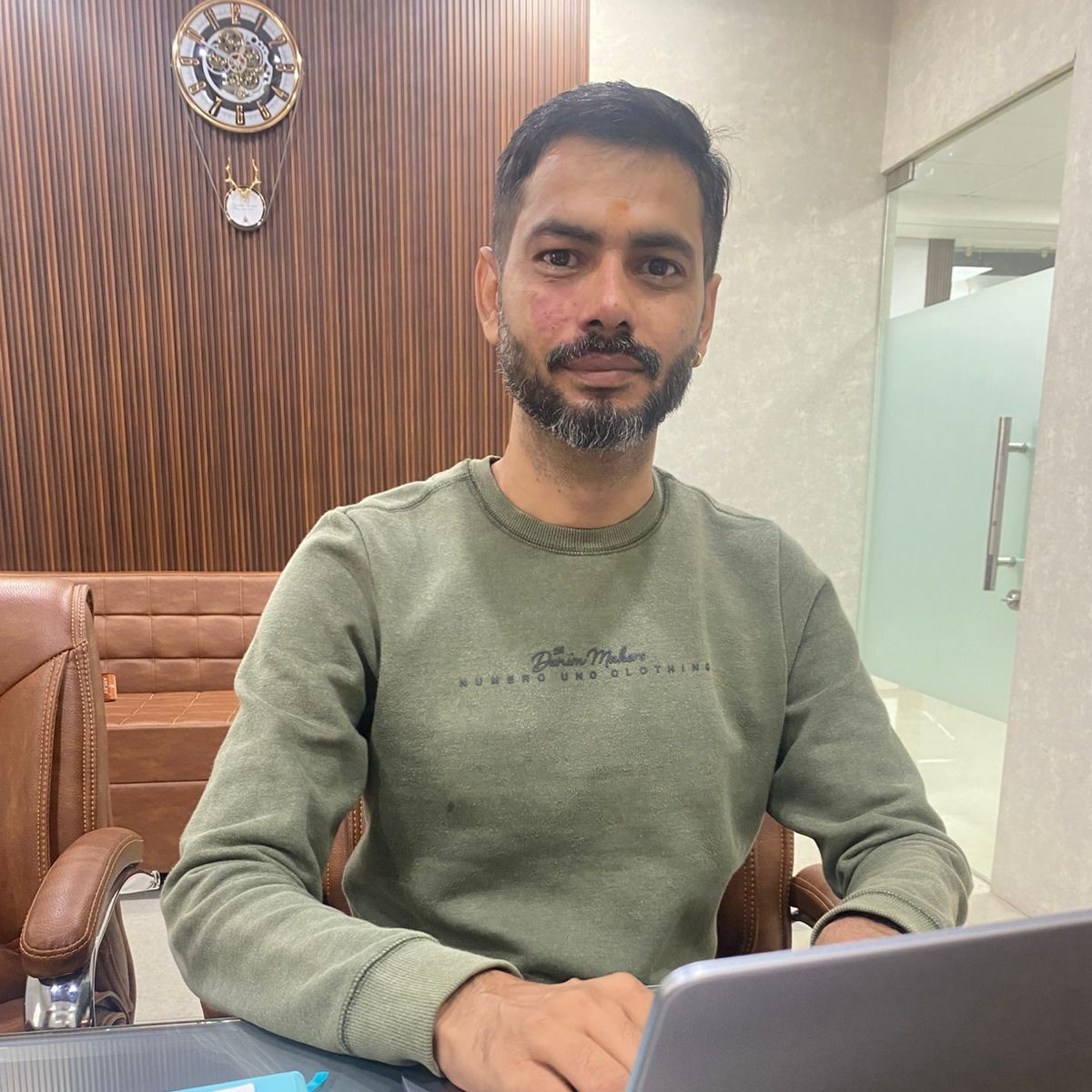
Deepak Kumar
Author | FlyTouch Overseas Private Limited
Deepak Kumar contributes to study visa and overseas education content at FlyTouch Overseas. He collaborates with experienced visa consultants and counsellors to develop informative guides covering university admissions, visa processes, and country-specific requirements.
With a focus on accuracy and clarity, his work helps students understand complex procedures and choose the right path for studying in countries like the UK, Canada, Australia, and the USA. His content is designed to provide practical insights and support students at every stage of their study abroad journey.